
Those Original Wildlife Artists of the Globe
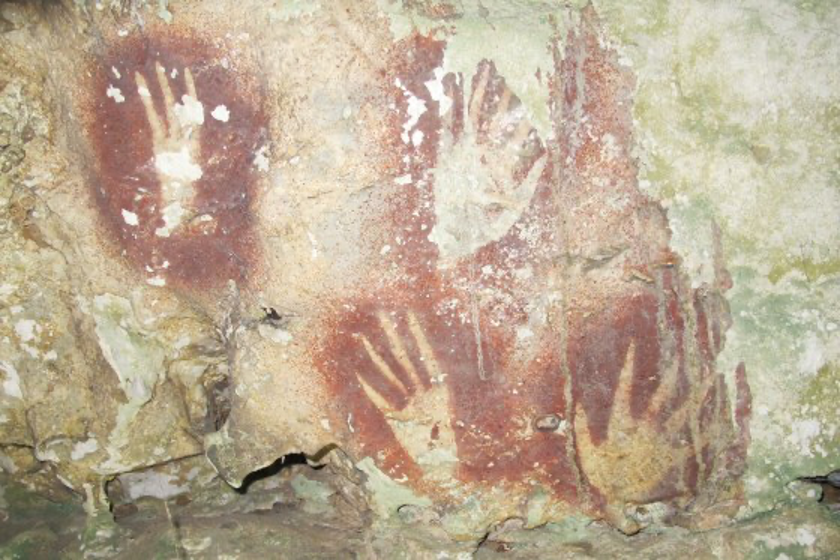
The oldest known figurative cave paintings in the world are at least 51,200 years old, discovered in Leang Karampuang Cave on the Indonesian island of Sulawesi. They depict a wild pig and human-like figures. However, non-figurative and abstract red stencil markings made by Neanderthals in Spain date back at least 64,000 to 65,000 years.
Scientists have discovered myriad cave paintings throughout the world, each exhibiting a degree of sophistication with passing years. In this blog, we will try to find answers to questions on two aspects of some of these cave paintings that are thought-provoking.
Except for wild animals and humans, why do we rarely see landscape art in cave paintings?
Paleolithic cave art rarely features landscapes because ancient artists viewed the world through a survival-centric lens where humans were not center stage. Their spiritual and ceremonial focus was on megafauna and the natural world directly tied to their daily sustenance, spiritual beliefs, and the supernatural realm.
Experts in paleoanthropology, such as those studying European sites like the Bradshaw Foundation Lascaux Cave Guide, point to several key reasons:
Survival and Magic: Most experts agree cave art served ceremonial or religious purposes, such as shamanic rituals to bless the hunt or seek prosperity from underworld entities. The megafauna were the central drama of Paleolithic life and the main source of survival, making them the most vital subjects to depict.
Abstract Symbolism Over Realism: Outside of animals, most of the Paleolithic imagery consists of geometric signs, dots, and hand stencils. Plants and landscapes are found less often, as vegetation and terrain were rarely relevant to the ritualistic or symbolic intent of the art.
The "Blank Canvas" Perspective: Prehistoric artists often used the natural contours of cave walls, like bumps, cracks, and fissures, to give three-dimensional form to the animals they were drawing, integrating the rock itself into the animal's body rather than using it as a backdrop for a landscape.
Anthropologists and experts across platforms like Wikipedia Cave Painting note that early humans did not conceptualize art as "window-to-the-world" scenes. The environment was simply a medium and a setting, while the animals themselves were the focus of human consciousness and storytelling.

Chauvet Cave wildlife art: what can we learn about the extinct European cave lions?
There are two famous, "somewhat modern," caves in France that have extraordinary cave paintings. These are two distinct archaeological sites located in different regions of the country, discovered at different times, and created thousands of years apart. Lascaux was discovered on September 12, 1940. Chauvet was discovered later, on December 18, 1994, by Jean-Marie Chauvet and his team. Chauvet's paintings are much older, dating back roughly 35,000 to 37,000 years, during the Aurignacian culture. Lascaux's paintings are younger, created around 17,000 to 21,000 years ago, during the Magdalenian culture.
The Chauvet Cave, in particular, is famous for its wall paintings showing lions and lionesses hunting four European bison. Each animal has been painted with such accuracy and attention to detail that it is remarkable how those gifted ancient artists were able to create them in such dimly lit, hazardous conditions. One remarkable observation scientists made later was that all these lions had no manes. So, were they all lionesses? The ancient cave artists answered that question in their art themselves. And since these artists painted true-to-life depictions, it was very clear that, indeed, these lions, the European cave lions, for they lived in caves, had no manes. But those ancient artists also showed a few lions with scrotums. Therefore, after observing these figures, we now know BOTH lions and lionesses had no manes. But how do we know which lion was a male and which one was a female?
The French Ministry of Culture's Chauvet site specifically says that two of the three lions in the "Three Lions" panel are male, identified by their scrotums, despite having no manes. For an authoritative reference, the official Chauvet-Pont d'Arc cave page has the "Three Lions" panel and explains exactly how the sex was determined: Chauvet-Pont d'Arc — Three Lions.

So, it became apparent that the cave artists painted both lions and lionesses exactly as they saw them. This was a big discovery. Indeed, in southeast Kenya in East Africa, there are lions that have no manes. In fact, the British hunter J. H. Patterson hunted two such maneless lions, which had become man-eaters, in his famous book, The Man-Eaters of Tsavo, published in 1907.

Did You Know?
Key Milestones in Early Cave Art
65,000 Years Ago: Abstract red dots, linear signs, and hand stencils were created by Neanderthals in Spanish caves such as Maltravieso, Ardales, and La Pasiega.
51,200 Years Ago: The earliest narrative painting depicting a scene with figures and a wild pig was made on Sulawesi in Indonesia using advanced laser-dating techniques.
45,500 Years Ago: Depictions of Sulawesi warty pigs were painted in neighboring limestone caves like Leang Tedongnge.
40,000–14,000 Years Ago: Famous European Upper Paleolithic cave art flourished during the Ice Age, including sites like Chauvet Cave in France and Altamira Cave in Spain.
Comments